
Philosophy professor prompts reflection through library installation
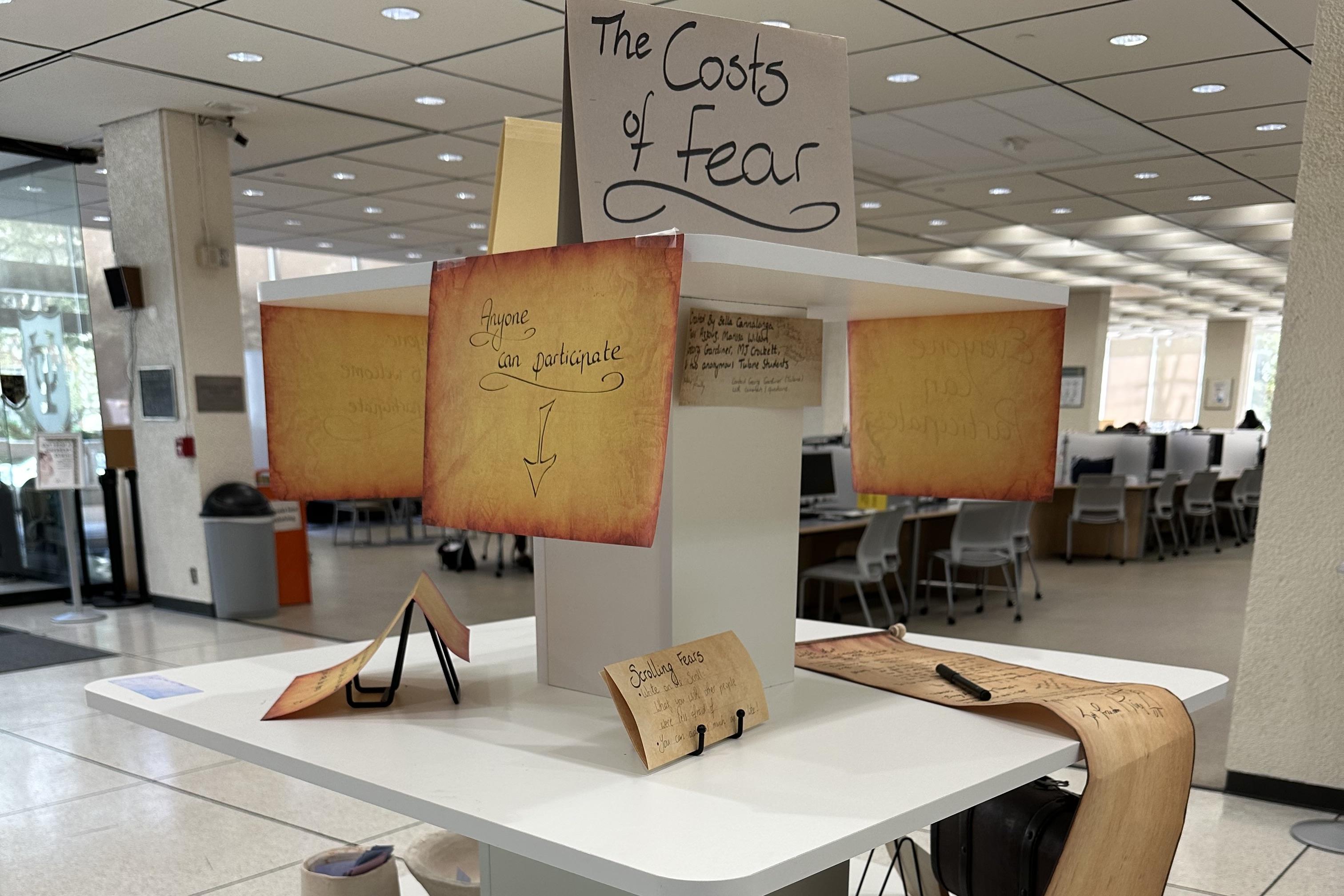
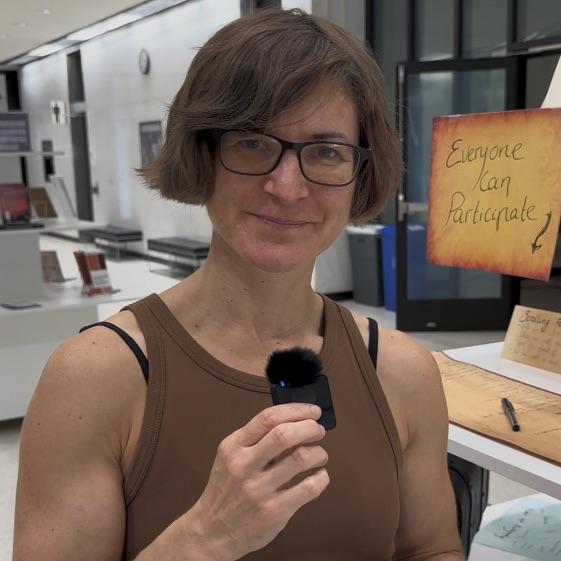
When Georgi Gardiner walks through Howard-Tilton Memorial Library, she doesn't just see a repository of books; she sees a canvas for questions, a stage for wonder and a space where scholarship can unfold through creativity and play.
Gardiner, an associate professor of philosophy in the School of Liberal Arts, is transforming the library into a philosophical art space where interactive installations invite students, faculty and visitors to engage with ideas in unexpected ways.
Her first exhibition, "The Cost of Fear," included two ceramic bowls. Visitors wrote down their fears about being judged or mistreated by others on a piece of paper and placed them into Bowl A. Others viewing the exhibit could pick up the paper, read it, and move it to Bowl B, signifying that the fears were unwarranted.
Gardiner developed the concept in collaboration with her students. “It just was this amazing, emergent teamwork idea."

The installation extended beyond the bowls, with other props posing more questions for the viewer to consider, including “What does fear of harm, hurt or error stop you from doing?” and “What do you wish other people were less afraid of?”. Another prompt invited reflection on what activities people would pursue if they weren't afraid of being bad at them.
Students and other viewers shared their fears surrounding relationships and their perceptions of themselves. When asked what they would do more of if fear didn't hold them back, dancing emerged as the overwhelming theme. The answer struck Gardiner as significant.
"This is one of the reasons I love second lines," she said. "At second lines, it really makes apparent that when it comes to dancing, we can reject the question of whether it's good dancing or bad dancing. There’s just movement and joy in movement and bonding through community.”
For Gardiner, such interactive installations aren't just creative flourishes — they're fundamental to how ideas take root. Her approach stems from a conviction that scholarship extends beyond memorizing facts to questions we haven't thought to ask yet and concepts for which we don't have words.
"For me, it's all about how much time people are spending thinking about the ideas in a fresh, new way," she explained. "How the participant is interacting is the artwork."
Gardiner's next installation promises to continue in the same spirit. "Hermes," also developed from students' philosophical artwork, is an interactive sculpture that invites participants to share their favorite words and concepts for understanding themselves, other people and the world around them.
Gardiner encourages students who are hesitant to engage with philosophical concepts to take the leap and think creatively. "A university is a space where mistakes are particularly important," she said. "If you're not making mistakes, you're not being open or ambitious enough.”
