
Tulane showcases its nationally acclaimed creative writing faculty at public reading
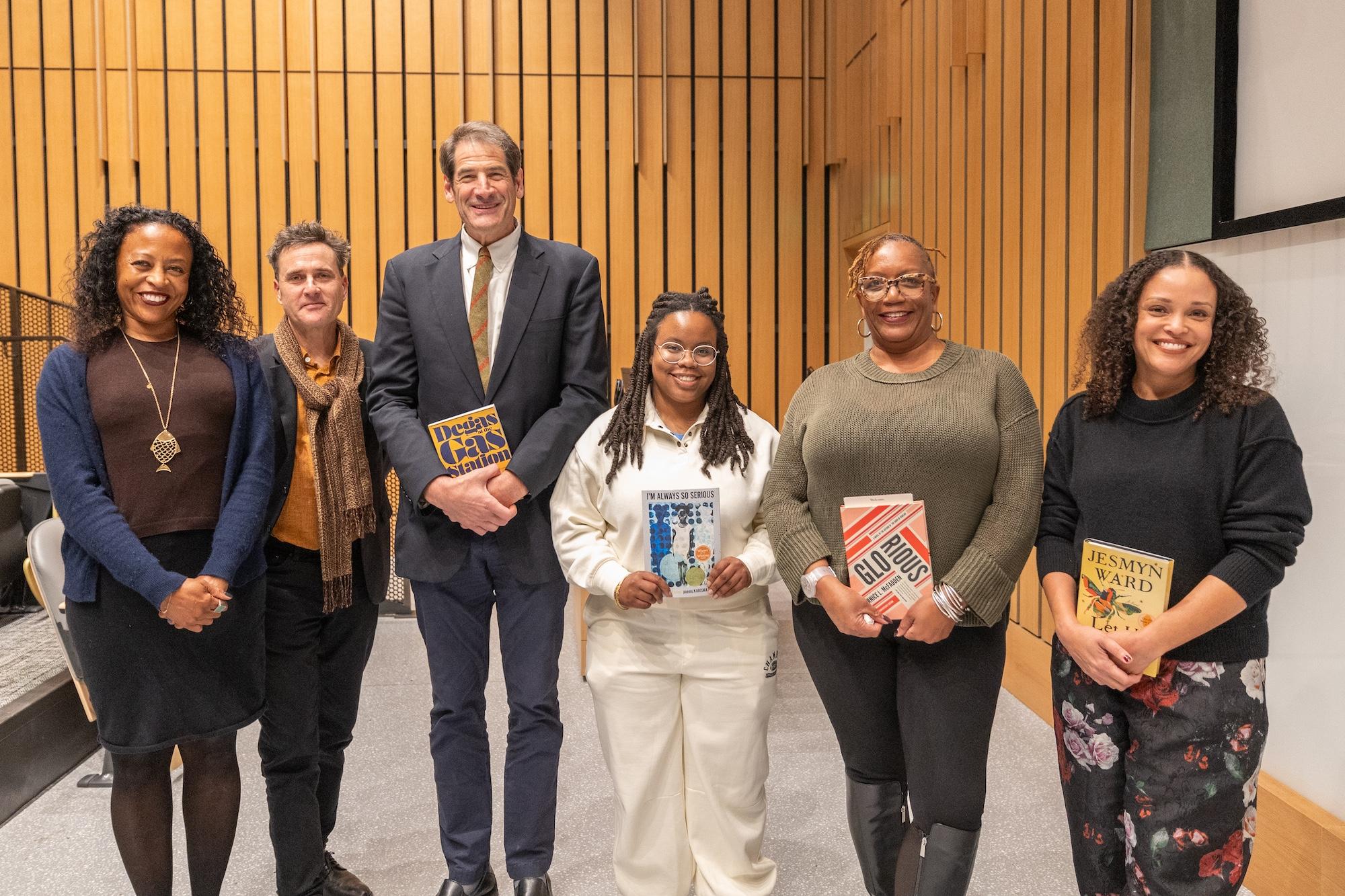
Eleven years after Tulane last gathered its creative writing faculty for a reading, six nationally celebrated writers came together at Lake Hall on Tulane’s uptown campus — an expanded and distinguished roster that now includes, in addition to a National Book Award winner, Guggenheim fellows and a MacArthur “genius.”
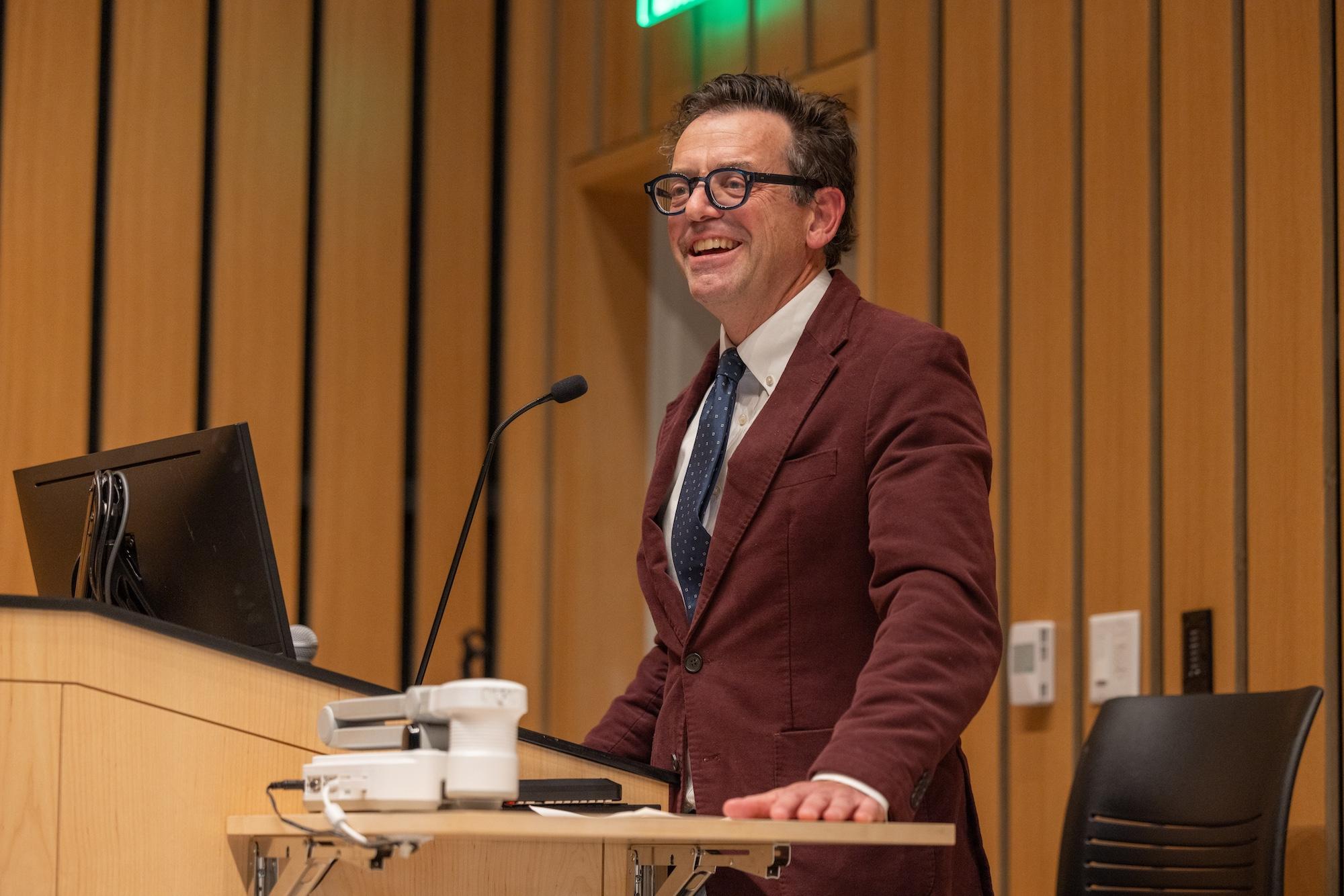
“When I saw the lineup, I almost didn’t believe that you’d all be in one place at one time,” Brian Edwards, dean of the School of Liberal Arts, told the panel as an audience of students, professors and literary enthusiasts gathered on Nov. 11. Edwards introduced each, at one point losing track of just how many Guggenheim fellows were sitting in front of him.
The featured authors included Thomas Beller, Ladee Hubbard, Zachary Lazar, Bernice McFadden, Karisma Price and Jesmyn Ward.
Beller’s latest book, "Degas at the Gas Station," is a collection of essays. He is a former Guggenheim Fellow and longtime New Yorker contributor. Hubbard is the author of “The Talented Ribkins” and “The Rib King,” and holds both Radcliffe and Guggenheim fellowships. Lazar, whose work ranges across fiction and nonfiction, is also a Guggenheim Fellow, recipient of the John Updike Award and author of the 2019 “One Book One New Orleans” selection “Vengeance.” McFadden, best-selling author of 17 novels, has received the American Book Award. Her book “Praise Song for the Butterflies” was long-listed for the Women’s Prize in Fiction. Price, whose debut poetry collection “I’m Always So Serious” was a New York Times Editors’ Choice, is also a 2025 Whiting Award recipient and winner of the Stanley Kunitz Prize. And Ward, whose acclaimed novels “Sing, Unburied, Sing” and “Salvage the Bones” each won the National Book Award, was also named a MacArthur Fellow in 2017, one of the most prestigious prizes in the nation.
Edwards emphasized the connection between the creative writing program and New Orleans itself. "New Orleans is global cultural capital, a city whose creativity is part of its lifeblood," he said. "To witness the great literary traditions of this city extended by these six writers — in ways that resonate throughout the country and the world — is truly an honor."
One theme of the evening was the richness of the Creative Writing Program and its plans to expand in the future. This expansion will feature a restructuring of the creative writing concentration for English majors, including the option of a creative writing capstone. The department is also working to broaden its offerings to all Tulane undergraduate students. Since Edwards arrived as dean, the department has added three additional powerhouse professors to the program — Price, McFadden and Hubbard, all of whom joined the department in 2022 as tenure-track faculty — according to Thomas Albrecht, chair of the Department of English.
“The interest in creative writing has grown,” said Albrecht. “And at the same time, having those new faculty members has helped increase enrollments in our creative writing courses and made it a more popular part of our undergraduate curriculum.”
Beller, who is also director of the creative writing program, said the program’s strength lies within its faculty, in the classroom and on the page. Each writer brings a distinct voice and an active writing practice to the program, while teaching across multiple genres — fiction, nonfiction, poetry and personal essay.
“All of us are, I think, doing interesting work and are being recognized in ways that are meaningful and very different from one another,” Beller said.
The reading was dedicated to Peter Cooley, Tulane's first professor of creative writing, who joined the faculty in 1975 and retired in 2018. Cooley, who attended the event, built the program from the ground up when such programs were rare at universities.
Beller couldn’t believe it had been so long since the faculty last shared their work together with an audience.
“I don't know why it took me so long to think of doing this reading, considering how well the 2014 reading went,” he said. “I imagine we will start to do this, if not annually, then something maybe close to it, or every other year; something regularly. It feels good to have some action around the whole thing.”
