
Beyond beads: Tulane students rethink Carnival throws
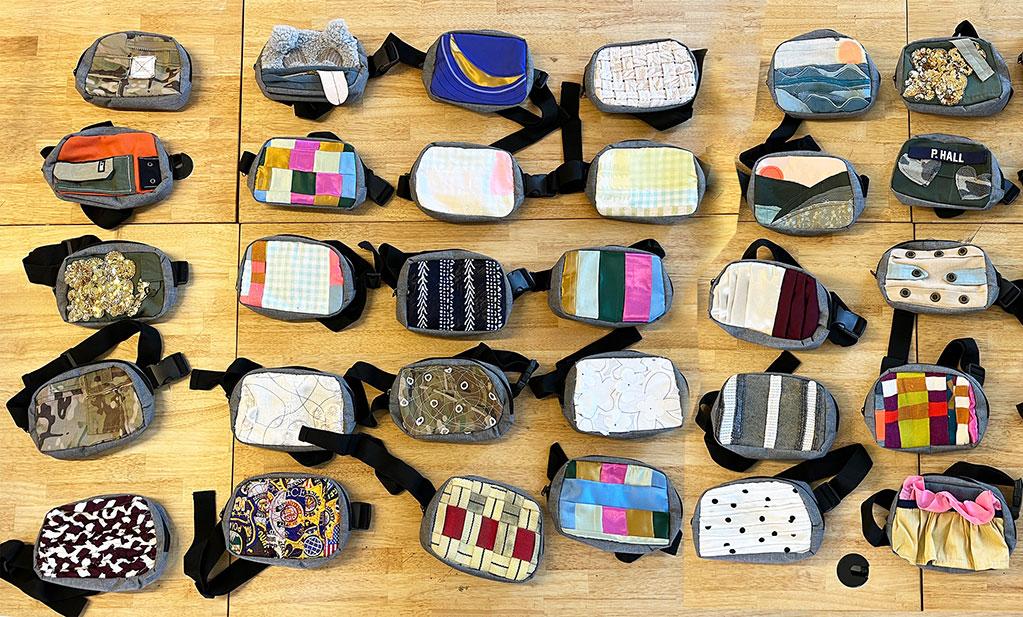
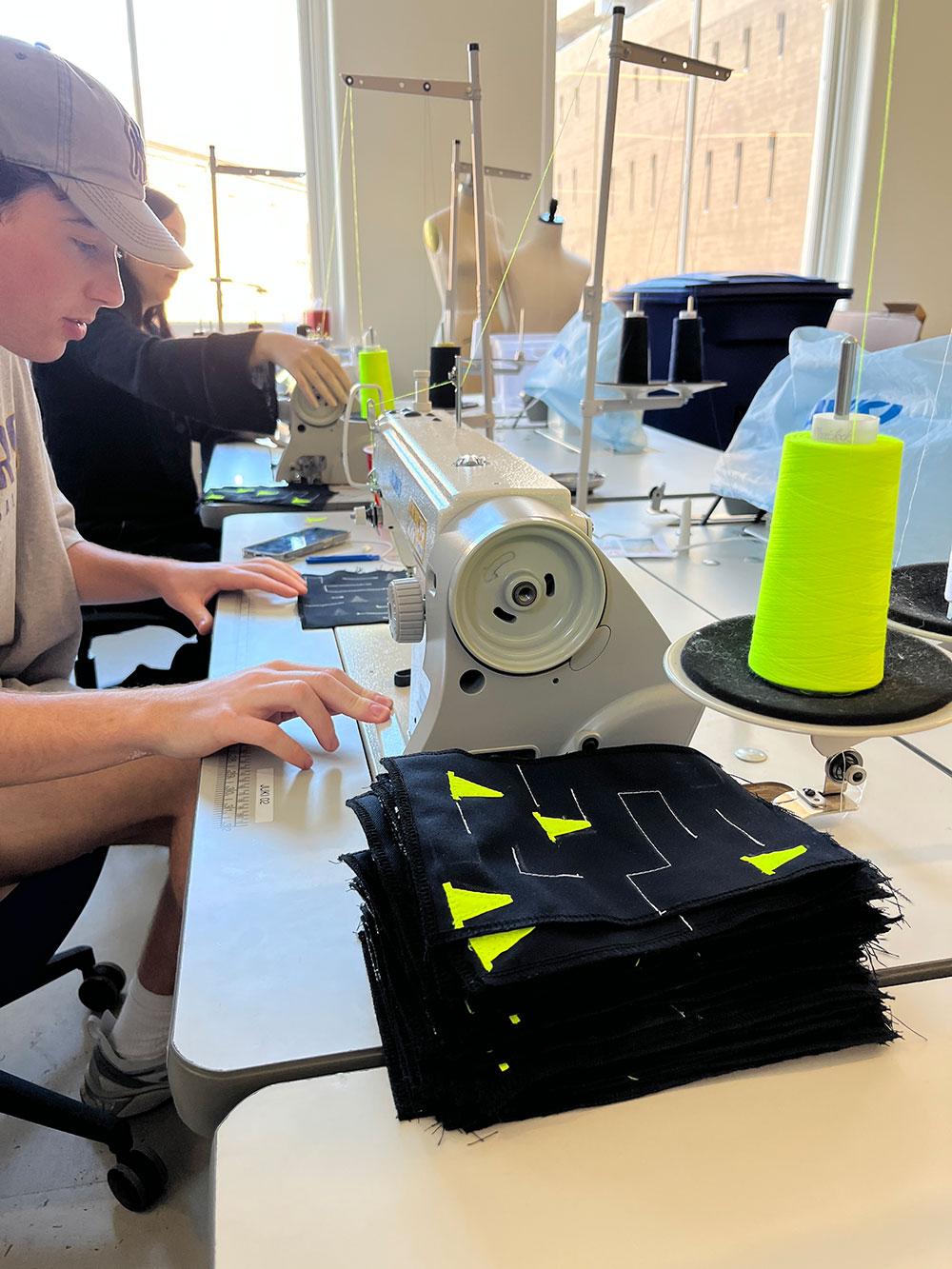
This Carnival season, paradegoers have the chance to catch something far more unexpected than the usual trinkets: student-designed fanny packs and fidget mazes made entirely from reclaimed materials that blend creativity, sustainability and craftsmanship into one-of-a-kind throws.
The fanny packs and fidget mazes were designed and produced by students in the Tulane University School of Architecture and Built Environment under the direction of Patti Dunn, a professor of practice in design and the school’s textile lab coordinator.
Beyond offering a unique catch, the student-designed throws also reflect a growing effort to make Carnival more environmentally friendly. Created entirely from reclaimed and recycled textiles, the pieces challenge the throwaway culture often associated with Mardi Gras and demonstrate how thoughtful design can extend the life of discarded materials.
“Most throws are designed to bring instant gratification but do not offer a lot of use beyond the initial catch,” Dunn said.
The fidget mazes will be tossed by the Mystic Krewe of Conus, a walking group in the Krewe of Mosaïque on Saturday, Jan. 17. The fanny packs will be thrown by Mom Force, a walking group in the Intergalactic Krewe of Chewbacchus Saturday, Jan. 24.
The vibrant collection of fanny packs showcases an eclectic mix of materials and styles, from rich velvet and smooth silk to patterns including polka dots, stripes, camouflage, florals and landscapes. The collection includes a green and blue Tulane-themed design alongside packs embellished with ruffles and jewels.
The fidget mazes were made from leftover police uniforms used in the film industry. Each one contains a wooden bead that users can maneuver to get from one end to the other. They were decorated with images of yellow and orange traffic cones — a nod to the Mystic Krewe of Conus, whose theme revolves around traffic cones and potholes.
“There is a growing desire to see our Carnival season become more sustainable, something that aligns well with Tulane’s and the School of Architecture and Built Environment’s core values and mission,” Dunn said.
She led the project through her upper-level textile design studio as a service-learning project, partnering with the nonprofit group ricRACK, which works to divert and recycle textile waste. One of its many programs is “Throw Me Something Handmade,” which teaches members from different krewes how to make throws from recycled textiles.
As part of the process, students volunteered at ricRACK, which gave them a firsthand look at how textile waste is transformed into opportunity.
“That was a really important part of the process because it allowed us to understand the full lifecycle of the garments we were using,” said Cole Hildebrandt, a design student. “It was not just about making a throw but about seeing how upcycled textiles could take on a new life.”
Students were asked to design two to three throws that could be made from ricRACK materials. Throughout the design process, students considered the needs of ricRACK, the krewes that would be tossing the throws and the people catching them.
At the end of the project, each student submitted a final design for a class vote, and the fanny pack and fidget maze won. A third design, a krewe necktie, is being presented to the Krewe of Bacchus to sell in their store.
Hildebrandt came up with the fidget maze idea. “I designed the pattern to match the exact route that Krewe Mosaïque follows, so the wooden marble inside moves along that same path, guided by the stitched maze,” he said.
“It’s not enough for something to simply be sourced from upcycled materials, he said. “People should want to keep it and use it, whether they are kids or adults.”