
Tulane work ethic fuels Olympic dream
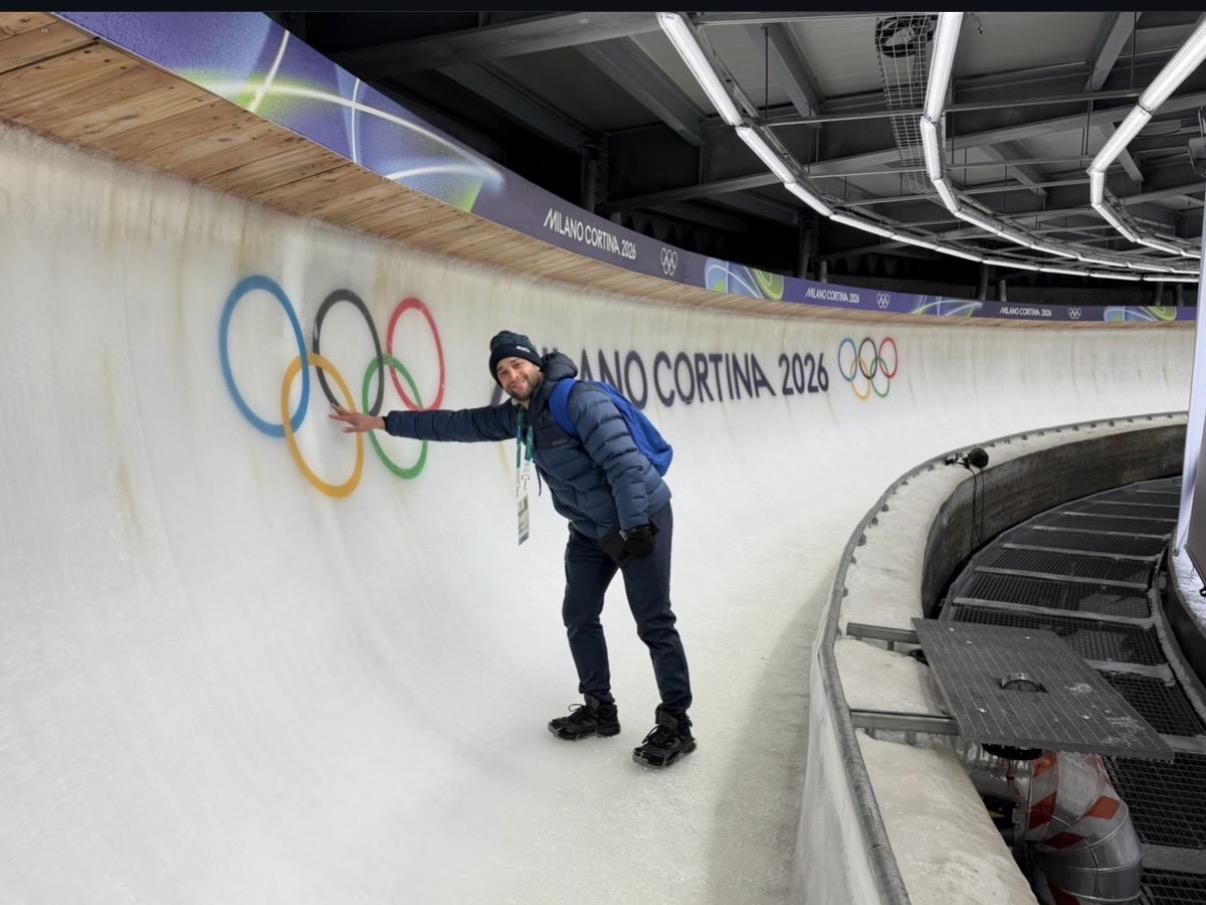
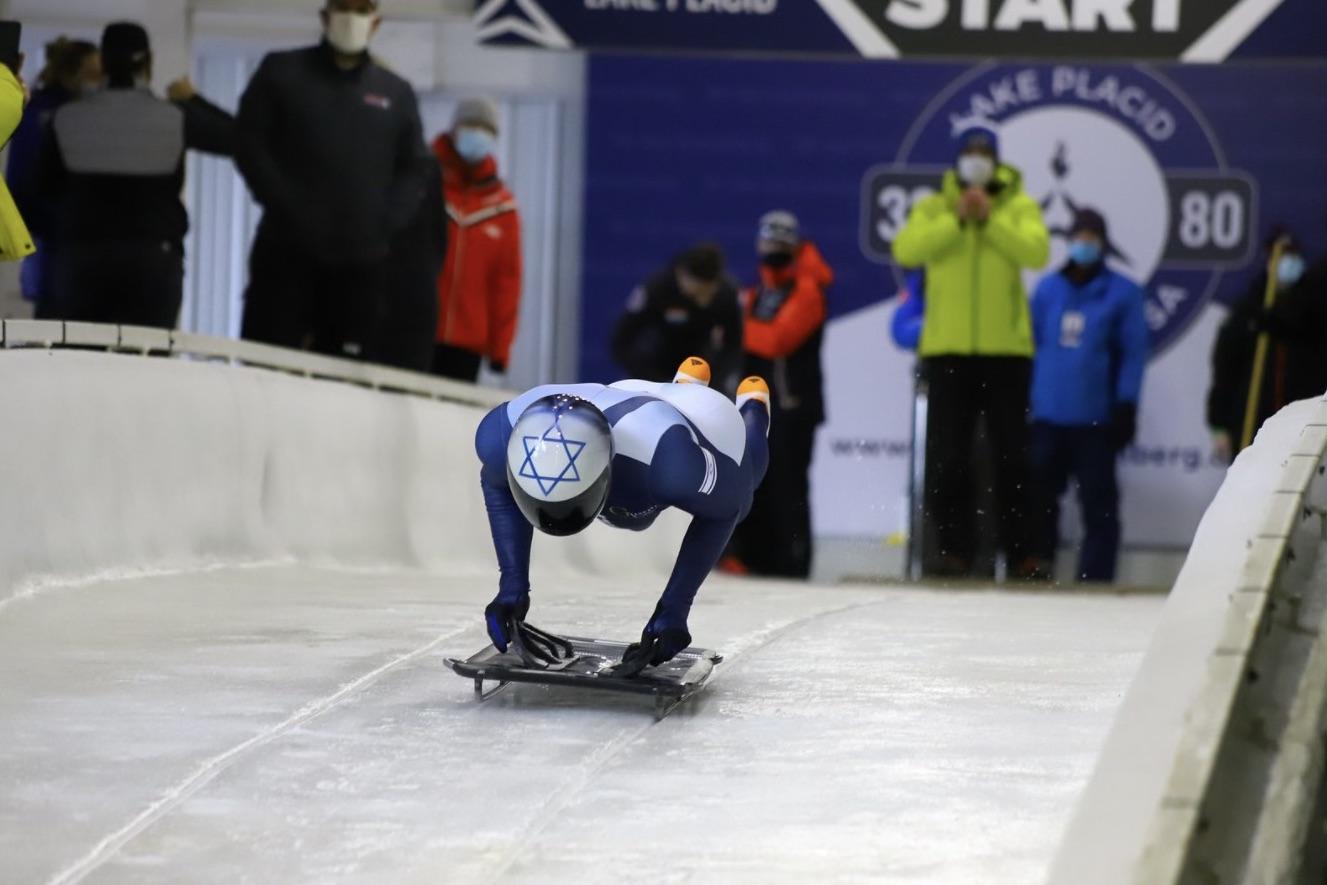
As a member of Tulane University’s track and field team from 2008 to 2012, Jared Firestone never imagined that 14 years later he’d be competing in the 2026 Winter Olympic Games in Milano Cortina, Italy — in the highly strenuous winter sliding sport of skeleton, no less.
But in a way, he says, his success on the ice makes sense, shaped by the values and discipline he developed at Tulane.
“The foundation for my work ethic began at Tulane,” said Firestone, a South Florida native who graduated in 2012 with a Bachelor of Arts degree in philosophy at the School of Liberal Arts and later earned a law degree from the Benjamin N. Cardozo School of Law at Yeshiva University in New York.
He added, “Waking up at 6 a.m. to lift weights, challenging classes, followed by grueling track workouts in the New Orleans heat helped shape my mindset for pushing myself to work, fundraise, train and slide down ice tracks at 85 miles per hour all at the same time to achieve my goal.”
Last month, Firestone, who holds dual citizenship in the United States and Israel, announced on LinkedIn that after 10 years of pursuing his dream, he qualified to represent Israel in the 2026 Winter Olympic Games in Milano Cortina.
“I can’t wait to compete along with 24 other incredible athletes next month in Italy,” he wrote.
He will do just that on Thursday, Feb. 12, at 3:30 a.m. EST and on Friday, Feb. 13, at 1:30 p.m. EST. The competition will stream on NBCOlympics.com and Peacock.
Skeleton is considered one of the most extreme and demanding Olympic events. It is a high-speed sliding sport in which athletes race headfirst and face down on a small sled along a refrigerated ice track.
“It involves pushing a 70-pound sled down a 50-meter ramp and jumping on, then navigating a mile-long ice course at speeds of up to 86 miles per hour and six Gs of force,” Firestone said. “You need the reactions of an F1 driver, the toughness of a boxer and the calmness of a monk to make it down as fast as possible.”
He added, “Many former 100-meter sprinters like myself get into skeleton because of the advantage we may have at the start.”
Firestone discovered skeleton while recovering from a mini-stroke during his first year of law school in 2013. At the time, he was unsure whether he’d be able to participate in sports again, having been told by his cardiologist to avoid physical exertion until further notice.
“For the next two months I pondered what my life would be like if I could never play sports again,” Firestone wrote in his blog. “I had identified as an athlete for most of the decade prior to this life-changing incident.”
Two months later, he was cleared to resume normal activities. Drawn to skeleton’s blend of speed, fearlessness and mental toughness after watching the Sochi Olympic Games, he immersed himself in the sport.
Firestone began competing internationally in 2019, making his World Cup debut representing Israel. In 2022, he became the first Israeli athlete to win gold in a skeleton race at an Olympic-discipline event and, in 2025, the first Israeli finalist at the International Bobsleigh and Skeleton (IBSF) World Championships.
“Representing Israel at the Olympics has been a 20-year dream in the making that’s now a reality,” he said. “Most of my training happened when nobody was watching — and I think that’s kind of the point. You don’t need the cameras on you to go all in on something you believe in. You just need a goal, and a strategy to move one step closer to it every single day.”
“If my mission resonates with someone out there,” he added, “that’s more important than winning a medal.”