
Tulane expert helps shape first update to National Water Strategy since Truman era
A Tulane University researcher played a key role in developing the nation’s first updated National Water Strategy in more than 75 years, contributing expertise on disasters, infrastructure and governance drawn from Louisiana and the Mississippi River Basin.
The updated strategy, led by the Aspen Institute and released Feb. 5, is the first national water strategy since the Truman administration. Developed over 18 months, the effort brought together more than 80 experts from government, industry, utilities, tribal communities, nonprofit organizations and academia to address persistent and emerging water challenges across the United States.
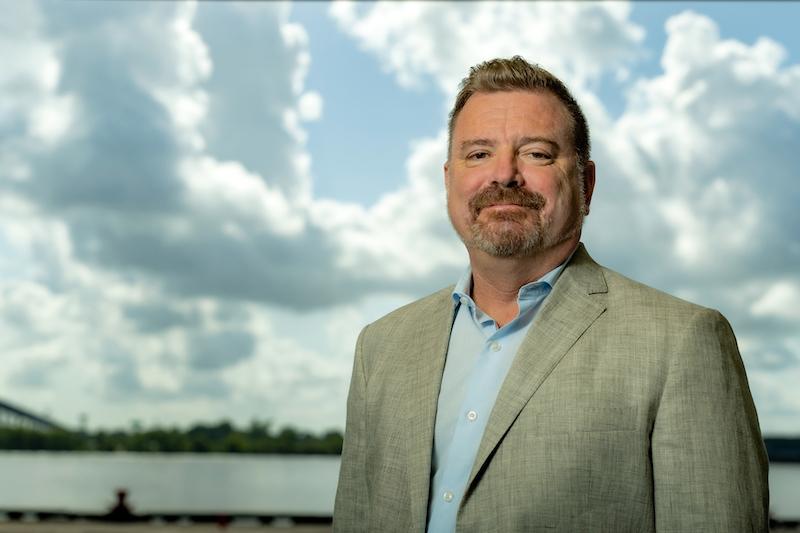
John Sabo, director of Tulane University’s ByWater Institute, was one of only three academic contributors to the initiative and helped shape sections focused on water-related disasters and infrastructure. The ByWater Institute advances interdisciplinary research and policy focused on water security, disaster resilience and climate adaptation, working across multiple schools at Tulane and with partners nationwide.
"“Without a coordinated water strategy, it’s very difficult for communities, states, and the federal government to plan for floods, droughts, storms, or long-term infrastructure needs.”
John Sabo, Bywater Institute
Sabo’s contributions emphasized the need to address slow-moving threats such as drought alongside acute disasters including hurricanes, flooding and wildfires, and to better coordinate how communities prepare for and respond to those risks.
“Water is often thought of as what comes out of the tap, but it underpins nearly every part of our economy and our ability to adapt to climate risk,” said Sabo, a professor in the Department of Coastal & River Science and Engineering in the School of Science and Engineering. “Without a coordinated water strategy, it’s very difficult for communities, states and the federal government to plan for floods, droughts, storms or long-term infrastructure needs.”
A central element of Sabo’s work focused on integrating natural infrastructure — such as wetlands, floodplains, forests, and aquifers — with traditional built infrastructure. The strategy highlights how coordinating these systems, alongside digital data systems and effective governance, can reduce risk and deliver more durable and cost-effective outcomes.
Sabo also brought a Gulf Coast and Mississippi River perspective to the national framework, drawing on Louisiana’s experience with post-Katrina governance reforms. He pointed to the consolidation of levee boards, shared data systems and coordinated coastal restoration planning as examples of how social and institutional infrastructure can strengthen water management.

“Many of the country’s most complex water challenges cross state lines and jurisdictions,” Sabo said. “The Mississippi River is a clear example — what happens upstream affects communities, ecosystems and economies far downstream. Louisiana’s experience shows how coordination and shared governance can make a real difference.”
The National Water Strategy addresses six interconnected focus areas: water and the economy, governance, rural water, disasters, infrastructure and innovation. Rather than prescribing uniform solutions, the document is designed to guide decision-making at federal, state and regional levels, particularly for large, multi-state water systems.
Sabo said the strategy is intended to be revisited and updated regularly, similar to national climate assessments, and that the ByWater Institute is positioned to remain engaged through research, convenings and synthesis work that support future five-year updates.
“This can’t be a one-time document,” Sabo said. “Water conditions, infrastructure and risks are changing too quickly. Revisiting this strategy every five years helps keep water security front and center for decision-makers.”
Following the strategy’s release, contributors plan a series of listening sessions and discussions around the country, including a potential convening in Louisiana later this year. Sabo will also participate in a panel discussion on natural infrastructure at the strategy’s official launch event in Washington, D.C.
