
From New Hampshire to the Mississippi Delta, graduates of Tulane’s river-coastal program are making a difference
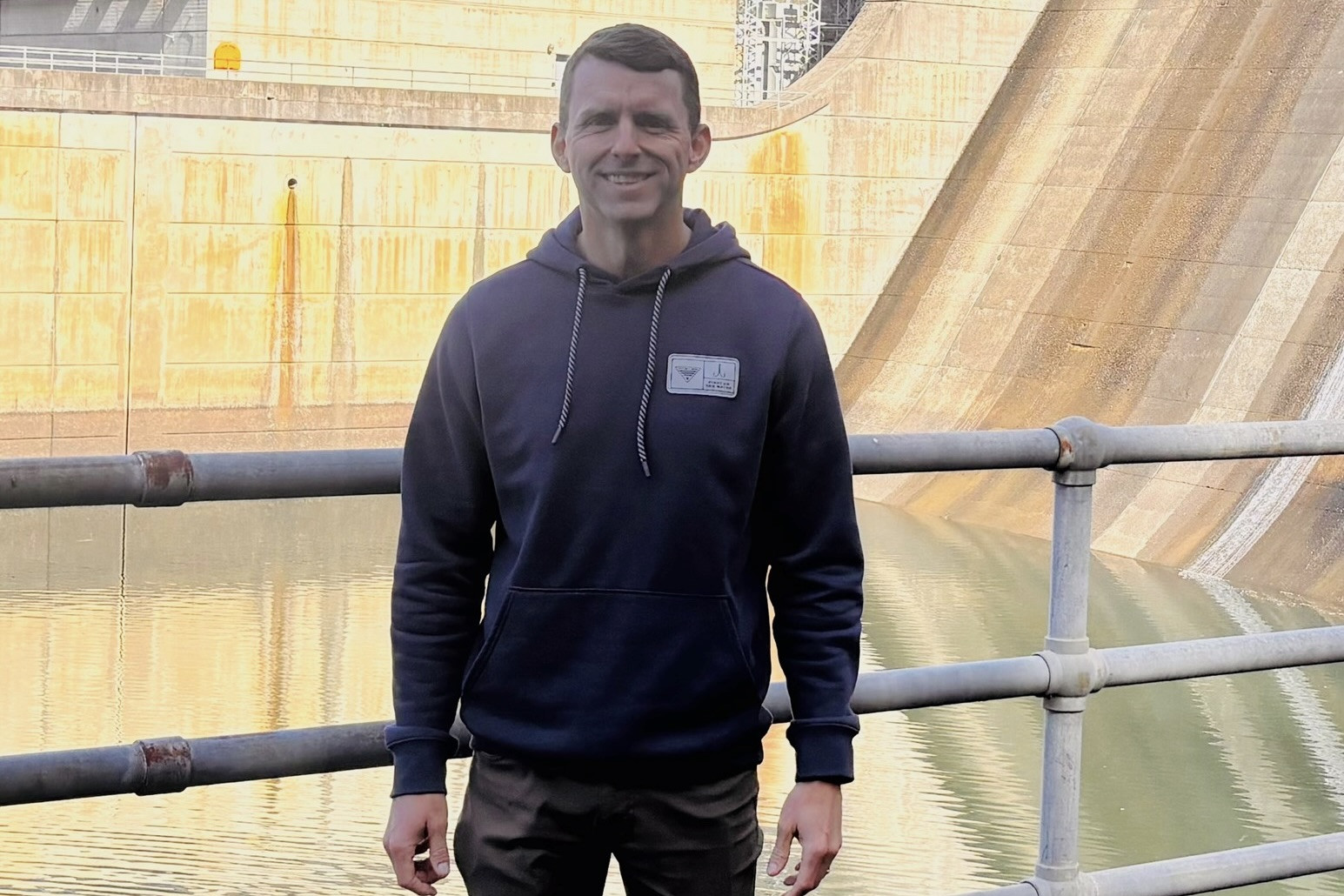
Hailing from across the United States and representing a wide variety of fields — including harbor dredging, infrastructure engineering, hydrology and river stabilization — the first graduates of the Master of Science program in River-Coastal Science and Engineering at Tulane University are working every day to understand and manage the rivers that shape communities, economies and ecosystems.
The hybrid degree is a distance-learning program designed for professionals who are working in water engineering, river science and coastal management across the United States. The first graduates of the program received their certificates in May of this year.
“Our students are already working on some of the most complex river and coastal systems in the country,” said Barbara Kleiss, research professor and coordinator of the River Science and Engineering Certificate Program. “The goal of the program is to give them deeper scientific understanding while allowing them to continue doing the work.”
Tulane’s Department of River-Coastal Science and Engineering has grown rapidly since its founding in 2017, when it was established to bring together river science, coastal processes and engineering into a single interdisciplinary program.
In 2018, Tulane formed a cooperative partnership with the U.S. Army Corps of Engineers to develop joint educational initiatives. That collaboration between Tulane and the U.S. Army Corps of Engineers remains central to the program’s success.
For graduate Ben Emery, a research civil engineer with the U.S. Army Corps of Engineers' Coastal Hydraulics Laboratory in New Hampshire, the program offered an opportunity to expand the science behind his day-to-day work. Emery serves as a dredging subject matter expert and previously managed dredging programs along the Mississippi River from St. Paul, Minnesota, to the Gulf. After years working in operations, he wanted to better understand the larger systems influencing river management.
“It helped close knowledge gaps and gave me the scientific foundation behind the work we do,” Emery said.
The program’s reach extends across the Mississippi River basin as well. In Little Rock, Arkansas, graduate Gabe Knight oversees maintenance engineering along the McClellan-Kerr Arkansas River Navigation System, a 300-mile waterway connecting the Arkansas River to the Mississippi River and supporting commercial navigation.
Knight originally enrolled in a distance-learning civil engineering program elsewhere but found the curriculum focused heavily on water scarcity challenges common in the western United States. Tulane’s program offered something much closer to his daily work.
“The courses were right up my alley for what I was doing day to day,” Knight said.
Through coursework in river mechanics, hydraulics and sediment systems, he gained tools that influence how he evaluates river behavior and infrastructure decisions.
“They taught me how to read a river,” Knight said.
In New Orleans, hydrologist and graduate Canda Lorson brought a different perspective shaped by years of fieldwork measuring rivers and water quality across the country. After transitioning from fieldwork into a more data-focused role within the Corps’ water management section, she saw the program as a chance to reconnect with the science behind the Mississippi River system.
“We’re in our own different world down here,” Lorson said. “The most water I ever measured in the Susquehanna was a couple hundred thousand cubic feet per second during flood events. Down here it’s over 1.4 million during flood events.”
Farther north along the river system, graduate Zach Lynch leads the River Stabilization Section in the Corps’ Vicksburg District, designing bank stabilization projects and revetments along the Mississippi River and several of its tributaries.
Lynch began the program during the COVID-19 pandemic to strengthen his technical foundation and prepare for professional engineering certification exams.
“It was all job applicable, which is exactly what I was looking for,” Lynch said.
Now as a section chief, Lynch encourages engineers in his office to take many of the same courses.
“These classes cover the fundamentals of what we do every day,” he said. “Understanding those basics helps everyone do their jobs better.”
Graduates said the program’s faculty, which includes six members from Tulane’s uptown campus and six adjunct professors from the U.S. Army Corps of Engineers and the U.S. Geological Survey, brought a rare combination of academic expertise and real-world experience to the classroom.
Those who completed the program say they feel both personal achievement and a shared professional investment in the future of river and coastal systems.
As Emery put it, the experience offered something deeper than simply another credential.
“You’re not just doing the work,” he said. “You understand the science behind it.”
